
Misreading Mamdani’s Victory: Zohran and the Contradictions of Electoralism
As Red Star’s 2025 convention platform argues, organization is the principal task of electoralism in DSA. The primary role of elections is not to win reforms for their own sake, but to strengthen DSA, deepen working class political consciousness, align DSA with radical sections of the working class, and move towards independence from the Democratic Party and its tools. Zohran Mamdani’s mayoral win in New York City has rightfully generated excitement across DSA. It demonstrated that socialists can win executive office in a major U.S. city by mobilizing a broad coalition around concrete material demands. Almost immediately, however, that victory has revealed deep contradictions, both within Zohran’s administration in its first month in office, and in how DSA understands its relationship to electoral politics. Rather than understanding Zohran’s win as a specific tactical success under particular conditions, DSA’s national leadership has begun treating it as a model to be replicated and, more dangerously, as a template for reshaping its own organizational political orientation. This risks pushing DSA further away from strategic electoralism towards tailism by subordinating party politics to electoral tactics, with serious consequences for a revolutionary horizon.
Zohran’s Victory and its Contradictions
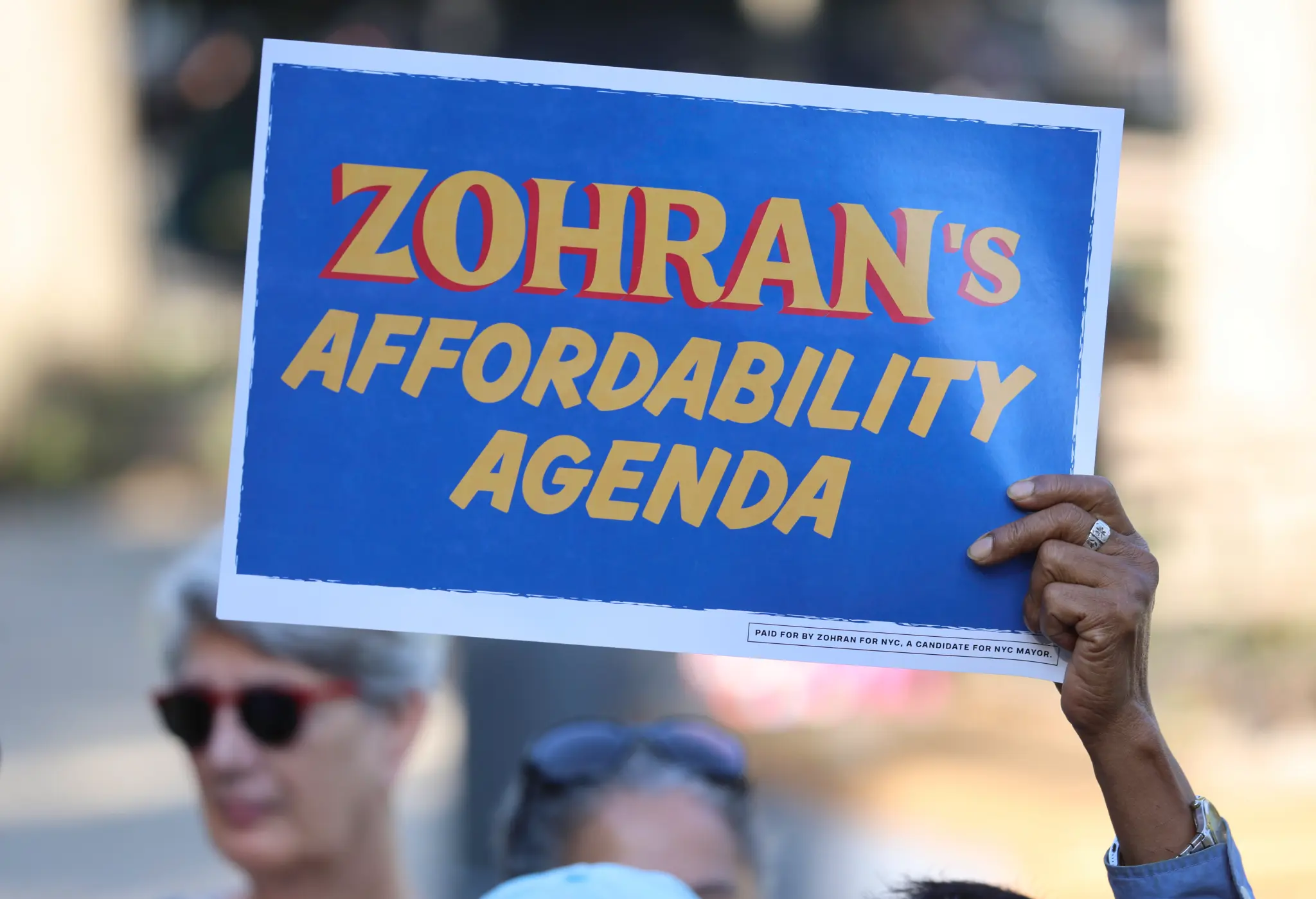
Zohran’s campaign centered an “affordability agenda” featuring three core demands: free buses, a rent freeze, and universal childcare. This agenda mobilized working-class New York voters, channeling their discontent into a decisive victory.
But the limits of this approach surfaced almost immediately following the election. In order to protect this agenda, Zohran endorsed Kathy Hochul for governor, despite her active role in breaking the largest nurses’ strike in NYC history, her unwavering support for Israel (which only a year ago Zohran described as genocide apologia), and the fact that a DSA member was running on the opposing ticket. In The Nation, he defended this move by saying he trusts Hochul to "engage in an honest dialogue that leads to results" even though they disagree on issues as fundamental to socialists as taxing the wealthy. In practice, the governor has offered only 2 years of funding for universal child care with no commitment to taxing the rich.
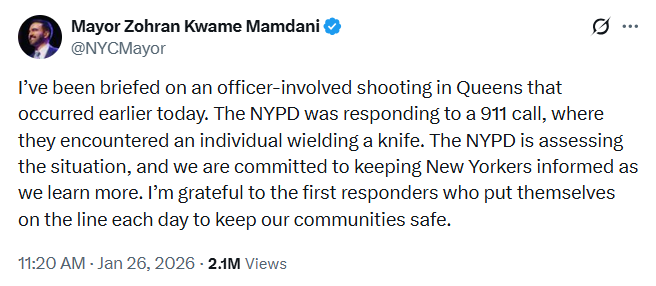
In addition, Zohran has signaled support for gutting environmental protections, embraced YIMBY-style housing deregulation, retained Police Commissioner Jessica Tisch, authorized deployment of militarized police units against anti-ICE protesters, thanked the NYPD for what he called an “officer-involved shooting” (the shooting of Jabez Chakraborty), and sought guidance from liberal Zionist organizations in responding to Palestine protests – all in just the first 5 weeks of his term.
It’s a mistake to frame these as primarily personal failures or tactical missteps. They are structural contradictions produced when elected socialists attempt to govern within bourgeois institutions while prioritizing narrow policy wins over party-building and popular education. When delivering on affordability becomes the primary metric of success, commitments to labor, abolition, environmental justice, and anti-imperialism are only conditionally upheld, insofar as they don’t interfere with parliamentary maneuvering. This imposes real, material costs on DSA’s socialist project. How can a DSA member be expected to join a picket line with NYC nurses and ask them to join DSA when our most popular member just endorsed a governor hellbent on breaking their strike? Why would immigrant community groups trust us when his administration deploys militarized police to arrest them for resisting ICE?
Several recent articles have touched on these dynamics of compromise, repression, and the limits of socialist governance within the capitalist state. NYC-DSA’s statement emphasizes accountability; Bread and Roses frames the endorsement of Hochul as ultimately self-defeating; Marxist Unity NYC centers the inevitability of police violence under executive office, and Liberation Caucus identifies these failures as expressions of electoralism’s systemic limits. What’s missing from these analyses, however, is a reckoning with DSA’s own organizational responsibility in producing and managing these contradictions. Without clarifying the central task of elected socialists as popular educators, organizers-in-chief, and extensions of working-class power, we limit ourselves to moral or tactical critiques rather than strategic ones.
Red Star insists that the central question is not whether Zohran made the “correct” parliamentary compromise in this or that scenario, but whether a socialist’s primary role is to navigate inevitable compromises from the position of public educator and organizer or to pursue social democratic reforms through individual governing expertise. We further ask whether DSA is building the organizational capacity, discipline, and political clarity necessary to prevent these contradictions from reproducing themselves over and over while we chase the ecstasy of electoral wins under a shifting, pseudo-minimum program defined by what appears feasible in any given moment.
How DSA is Tailing Zohran
In practice, electeds - especially in high profile executive races - face tremendous pressure to soften antagonisms, simplify explanations, and foreground demands that appear relatively “responsible” within bourgeois politics. In response to the manifestation of this reality under Zohran, DSA could choose to confront it head on, reflecting on what organizational infrastructure DSA needs to build to productively manage them in the future, reconsidering what it means to prioritize running a President in 2028, and honestly reckoning with what it means for the party to lead its candidates. Instead, much of DSA’s national leadership has moved to institutionalize Zohran’s strategy and messaging. In December, the National Political Committee passed a resolution effectively adopting Zohran’s communications strategy. Citing Zohran’s success, it directs DSA’s external communications to center affordability, develop national materials promoting that framework, and elevate chapters and candidates that adopt affordability language. Red Star stood in sole opposition to this reframe - not out of hostility to Zohran’s campaign or disregard for the real material pressures faced by working class New Yorkers, but because this move represents a profound strategic error. By treating Zohran’s campaign as a template rather than a case study, DSA is allowing a single electoral tactic to dictate national political orientation.
This tendency extends beyond communications. At the same meeting, the Socialist Majority Caucus introduced a proposal titled “Hundreds of Zohrans” committing staff and resources to replicating his campaign model nationwide. Together, these initiatives mark a shift away from party-building and toward a DSA that serves as a support apparatus for reformist governance.
We should, of course, be synthesizing lessons from the NYC race (and all races across the country) and sharing them with chapters so they can adapt those insights to local conditions. But synthesizing electoral lessons does not mean turning a tactical success into a universal model. As the NYC DSA co-chairs emphasize, the city’s uniquely extensive public sector, strong unions, and history of social democratic achievements shaped Zohran’s messaging and made it particularly resonant in a way that may not be true in other cities. But most importantly, these are tactical lessons, when what’s needed are lessons about how electoral organizing can build revolutionary consciousness and develop DSA as an independent force.
The Party’s role: Popular Educators and Organizers-in-Chief
Marta Harnecker, the Chilean Marxist journalist and strategic advisor to Hugo Chávez, stressed that socialists must understand themselves as public educators - translating theory, history, and struggle into accessible explanations of why capitalism produces suffering and crisis and how it can be abolished. Electoral campaigns, when used strategically, should also serve this pedagogical function. A campaign for office is not just a grab at the reins of power but an opportunity to conjure up the social base for an agenda of wholesale transformation that arises from the popular classes themselves. To the extent that our aim is to build a party of the working class, electoral campaigns and socialists in office should use their platforms to clarify class antagonisms, teach socialist politics, support DSA’s organizational work, recruit members, and help build the infrastructure necessary for class struggle. In practice, however, socialist electeds are pressured to compromise on party building priorities first, retreating to safer terrains like cost of living or affordability politics.
While tactically understandable, this retreat into affordability politics carries significant strategic cost when unmoored from a party-building context. Rather than clarifying antagonisms, affordability messaging mystifies them. Without an analysis of capitalism’s structural crisis, affordability is reduced to describing symptoms without explaining causes. In doing so, it sacrifices the very explanatory power socialists need most in a moment of deepening crisis.
Imagine, for example, a socialist candidate championing a policy for universal rent control. Running on a form of “making housing affordable for all,” they may win broad support by correctly identifying a widespread symptom of distress. However, if this messaging stops at affordability, framing high rents as a policy failure or a problem of greedy landlords, it leaves the underlying engine of the crisis unchallenged. It does not explain that housing is commodified under capitalism, that its financialization is a key outlet for stagnating capital, or that the real estate market produces homelessness on a structural level.
Consequently, the central political antagonism is mystified. The fight appears to be tenants and “bad” landlords, or citizens and inefficient regulators. The deeper conflict between the working class’ need for a home and the capitalist's need for a profitable asset remains obscured. Worse, when inevitable compromises and limitations of the rent control bill emerge, supporters are left disillusioned, their anger diffused and analysis no deeper than when they began. The socialist movement has won a policy skirmish but missed a crucial opportunity to build a base that understands why such struggles perpetuate under capitalism, strengthening their organizational and analytical capacity for the larger, longer fight. DSA’s challenge in this moment is to build the infrastructure and political will to center the diagnosis at every turn, encouraging our existing electeds to flex the party-building muscle to the highest extent feasible in the meantime.
DSA’s Convention Mandate and the Inversion of Party and Candidate
At the 2025 National Convention, DSA passed resolutions committing itself to becoming a party surrogate with real political independence and assessing its endorsements based on party-building criteria, including explicitly socialist messaging, recruitment, and alignment with movement struggles. The mandate was clear: the party leads, and the candidates serve the party’s long-term strategy. By reshaping DSA’s national communications and electoral approach around Zohran’s campaign, the NPC is inverting this relationship. Maintaining support among the electoral base becomes the prime directive; organizing and mobilizing the class forces that can make moves towards DSA's more revolutionary demands against capitalism, imperialism, and the repressive arms of the state takes a backseat. The guiding question becomes: What messaging wins elections? rather than How does electoral work advance working-class organization and class consciousness?
Unlike our elected officials, DSA itself is not constrained by the immediate pressures of governance. It has the leeway and responsibility to speak more boldly, to clarify antagonisms and situate reforms within a revolutionary horizon. Tailing Zohran abandons that responsibility and subverts the will of convention. Indeed, when Red Star proposed implementing a rubric for National Electoral Commission endorsements out of concern that convention criteria was being ignored, the NEC Steering Committee shut it down.
Reform, Revolution, and the Historical Trap
Zohran’s affordability politics draws much of its appeal from an implicit nostalgia for postwar social democracy, when imperial expansion created space for concessions that temporarily stabilized capitalism. In New York City, remnants of that settlement remain, sustaining hope that it can be restored towards socialist ends. History shatters this illusion, however. In interwar Europe, once imperial expansion stalled, reforms no longer contained class antagonism. As concessions shrank and repression intensified, bourgeois democracy gave way to authoritarianism. Social democracy, tasked with managing capitalism’s decline through social reforms, ultimately sided with the state against the working class.
“The fate of the wonderful municipal houses of Vienna is a symbol. The constructive work of the Socialists created them; the guns of Fascism have reduced them to smoking ruins. The “symbol” goes very much further than the Second International appears to realise. It was not only the apartment buildings that were struck by the guns; it was the illusions of reformism, of the “alternative” path to Bolshevism…
…In 1927 the anger of the workers at the growth of Fascism and open connivance of the State authorities broke all bounds. Following the acquittal of a Fascist who had murdered a worker, they rose and stormed the lawcourts of Vienna; Vienna was in their hands, if their leaders had been ready to lead. But their leadership, in control of the municipal administration of Vienna, sided with the bourgeoisie, with the police, with the State authorities, and thus in fact with Fascism, against the workers. The workers’ rising was crushed in blood, with the connivance of Social Democracy.”
— R. Palme Dutt, Fascism and Social Revolution
The lesson here is not that reforms are meaningless, but that reforms detached from revolutionary organizing become tools for pacification, and reformists, unmoored from revolutionary infrastructure and outlook, concede more and more in the name of protecting those reforms, until at last they concede the struggle altogether.
The United States is now sliding into an analogous period of imperial decline. Superprofits are no longer sufficient to stabilize the American system. Democratic norms are eroding, repressive apparatuses are expanding, and fascism is offered as a solution to capitalism’s crises. In this context, the political horizon of social democratic demands alone is not merely inadequate, it’s dangerous.
Beyond Tailism
Ultimately, the issue facing DSA is not one particular resolution or elected official. It’s whether DSA will repeat a fatal historical pattern by trading party-building for short-term social democratic wins. As concessions disappear, crumbs are the prelude to the butcher’s knife. Immigrants are detained and disappeared to concentration camps, trans people are denied healthcare, and labor is met with police violence (overseen by one of our own!). In such a moment, a socialist organization cannot limit itself to lamenting the rising cost of living alone. Our task is to explain why life is becoming unlivable, and why it will not be fixed within capitalism.
Concretely, DSA should develop national infrastructure to support recruitment, cadre development, and political education through its electoral campaigns. We should build towards a rigorous accountability structure including regular reporting to and direction from chapter leadership to ensure electeds advance DSA’s broader priorities like labor militancy, anti-imperialism, and abolition. We should meaningfully adopt the partyist endorsement mandate from convention with a transparent rubric assessing candidates.
Finally, we must shift our primary metrics of success away from policy victories and re-election prospects, making the case for rejecting tailism and recommitting to popular education, revolutionary organizing, and party-building as the core metrics of success in our electoral work (see Red Star member Bob M's campaign retrospective for an example of this). DSA’s elected officials must act not as managers of decline, but as extensions of an organized working class, promoting our unionization efforts, boosting our electeds, standing unambiguously with militant anti-ICE protesters and Palestinian liberation efforts, promoting DSA at every turn and helping build the clarity, courage, and capacity required for liberation.
Further Discussion
If you're interested in discussing this piece with other DSA members, head on over to the DSA Discussion Board.
The forums are open to all DSA members in good standing. If you're not a DSA member in good standing, sign up or renew your dues here.
Note: An earlier version of this piece incorrectly referred to "the murder" of Jabez Chakraborty, who is alive and still undergoing medical treatment while facing prosecution.