
Critique of the Rank and File Strategy

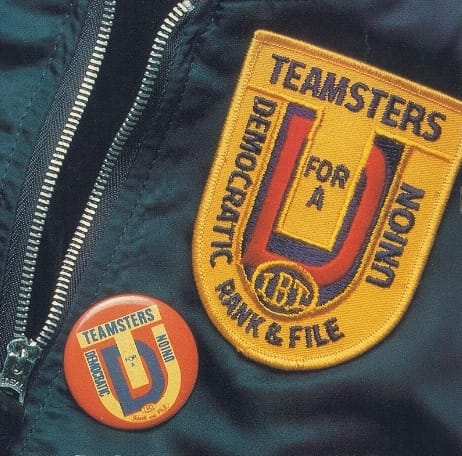
Kim Moody’s Rank and File Strategy, written in 2000, has become a touchstone of modern Socialist Labor Organizing. Primarily this is through Moody’s involvement with Labor Notes and Teamsters for a Democratic Union (TDU), the preeminent exemplars and standardbearers of the Rank and File Strategy, but also through socialists in DSA and elsewhere adopting and implementing the Strategy (or at least referencing its tenets) as the guiding principal of their labor organizing.
The Rank and File Strategy, as theorized by Moody, attempts to grapple with the failures of past socialist labor organizing and the present (at time of writing) weaknesses and disconnect between socialists and workers. In a nutshell, he proposes that
- Class consciousness is at a historic ebb in the U.S.
- Socialists cannot bring socialism to workers who are not already at a certain level of class consciousness.
- To increase the level of class consciousness, socialists must organize within and alongside the labor movement to implement the transitional program, consisting of demands, actions, and practices that bridge the gap between immediate material interests of the working class and the larger political goals of Socialism.
- To advance this transitional program, socialists should build transitional organizations, like TDU and Labor Notes, that advocate for this agenda within unions.
- The pursuit of this transitional program adopted will inevitably provoke conflict both with company bosses and union bureaucracy, and this struggle will serve as a mechanism to raise class consciousness of the workers engaged in the struggle.
The bulk of the piece consists of Moody’s analysis of the successes and failures of unionism throughout U.S. history, the struggles surrounding the Trade Union Education League (TUEL), and the origins and development of modern Business Unionism. In particular, he calls out the failures of the Communist Party in properly constructing a bridge between non-class-conscious workers and the Party itself, which he identifies as resulting from a top-down, bureaucratic, and overly-ideological approach. Instead, he identifies the need for “independent” rank and file organization as the essential component for developing class-consciousness.
Moody’s historical analysis is very shaky, and his read of the forces and conditions at play seem to follow from the point he wants to make, rather than the other way around. After brusquely dismissing arguments about the U.S. “Labor Aristocracy” being bought off with imperial super-profits, he turns around and says that U.S. workers were willing to accept AFL Business Unionism due to rising wages from WWI. He identifies both good and bad economies as the cause of declining labor militancy. He variously blames the Communist Party both for intervening too much and not intervening enough.
Another weakness in his historical analysis is glossing over a big part of his own history with Rank and File organizing; the 1970s Industrializing effort, wherein young, college-educated socialists of Moody’s generation would take blue collar jobs in an effort to more closely interact with the working class. While one would expect this recent, direct experience with this type of organizing to get at least a full section, especially when the bulk of his other analysis is drawn from the 1930s, this gets no more than a couple sentences. Although Moody acknowledges the failure of this approach, it continues to be a reference point for modern Rank and File Strategy activists.
Overview of the Strategy
To deal with the obvious; Moody is a Trotskyist, and the Rank and File Strategy is rooted in Trotskyist theory. This is most obvious in his use of the transitional program as the basis for the strategy, the invocation of organizing “from below,” and his complaints about the official Communist Party strategy. This pedigree obviously doesn’t reflect on the correctness of the theory itself, but it does contribute to some of the deficiencies in his analysis.
We see throughout the work the classic Trotskyist analysis that the conditions for revolution have already ripened, and that all failures to capitalize on this are the result of the strategic failures of revolutionary leadership. The Rank and File Strategy is not a history of events, but a history of strategy, and in its explanation strategies fail not due to historical events, but due to ideological mistakes by leadership.
Secondly, the period in which the piece was written is obviously extremely relevant background to the Strategy. In 2000, Socialists were in an incredibly bleak period where the hegemony of the U.S. seemed completely unchallenged, the end of history had been declared and not yet disproven, and the labor movement was entering its third decade of stagnation and decline. The non-existence of a meaningful socialist or communist party, and the unattractiveness of Socialism as an ideology, is axiomatic. The pessimism seems discordant post 2016, when the Bernie campaign has rejuvenated the U.S. socialist movement, largely bypassing the strategic avenues that Moody was focused on. In addition, some of Moody’s optimistic notes also seem outdated. The 1996 Labor Party which Moody approvingly speaks of was a complete flop, and Workers’ Centers have not turned out to be a major feature of the Labor landscape in the way that Moody had hoped for.
The Strategy has a lot of moving parts, and rests on a number of load-bearing claims. Three principal ones; the U.S. working class is not bought off by imperial superprofits, labor struggle is the most meaningful source of class consciousness, and a socialist party is an impossibility under the present conditions. Once these positions are taken, the logic of the Strategy flows naturally from them; there is no need to reckon with U.S. imperialism, global capitalism, or the Third World; socialists should continue to focus their efforts on unions despite their acknowledged (and unacknowledged) deficiencies and decline; and this must be done not under the control or direction of a unified Socialist political movement, but “independently” and “from below,” and only “coordinated” by organizations like the ones Moody is involved in.
Although Moody is at pains to dodge the claim, the fact is that the kernel of the idea is pure economism. Trade union consciousness must precede socialist consciousness, and in the U.S. there is a deficit of trade union consciousness; and so, socialists must create it manually, through putting the working class into conflict with capital. As Moody says, “The gaping lack in the U.S. at this time is the lack of a sea of class-conscious workers for socialist ideas and organizations to swim in. How do we help create that sea[?]” He contrasts this with traditional “European” Marxist theory, where “class consciousness ‘in itself’ was assumed to be a natural product of capitalism and class conflict, at least among organized workers and their communities.”
Moody contends that the U.S., due to the peculiarities of its history (which he identifies primarily as expansionism, racism, business unionism, and the lack of a working class party), has produced a hegemonic culture that is corrosive to class consciousness, and that in order to overcome this hurdle, an extended and carefully managed preparatory labor struggle must be undergone before most workers will be ready to discover socialism. Moody also downplays the role that theory plays in the development of socialist consciousness. He criticizes socialists for “highly theorized, often moralistic politics,” criticizes Lenin for the idea that “revolutionary socialist consciousness had to come from outside, from professional revolutionaries trained in socialist theory.” Although he claims that “the strategy does not assume that socialist consciousness flows automatically from ‘economic’ struggles,” it is clear that he thinks the gap between trade union and socialist consciousness, or between a class “in itself” and “for itself,” can be “bridged” by a properly-composed transitional program, which will guide workers from a pragmatic struggle for material gains, into a political struggle for socialism, without the need for a party, for theory, or internationalism.
With this “bridge” formed by Labor Notes, TDU, the Labor Party, Workers Centers, and so on – Moody believed that socialists could ride the wave of the existing “Rank and File Rebellion” so long as they avoided pushing their politics, and instead focused on gently shaping spontaneous union struggle in the direction of transitional demands, over the course of decades, slowly creating that sea of class consciousness where socialist ideas could flourish.
Transitional Organizations
The content of the bridge, the specifics of the transitional program, is left frustratingly vague in the piece. Moody writes, “Such a program for today is not so much a list of demands as a combination of demands, goals, and actions.” The nature of these actions, and what makes them transitional as opposed to economistic, is rarely touched on. To the extent that we can glean an understanding of “transitional” labor organizing, it has two main aspects: it must be “independent” and “class-wide.”
By independence, Moody means independent from leadership by a socialist party. Instead, he advocates for “a synthesis in which socialists play a leading role in these rebellions without subjecting them to the control of any ‘party’ or socialist organization.” This argument seems strange: Moody was a member of Solidarity, a Trotskyist organization, and The Rank and File Strategy was published through their official channels. He was also a founder and staffer for Labor Notes, and indisputably used it as a means of implementing his strategy. At the end of the text he calls for “building socialist organization that relates to all of these levels of working class activity as well as promoting and acting on a broader socialist politics covering the entire range of social, economic, and political issues… socialist organization also makes possible the coordinated division of labor of its activists that is essential to the rank and file strategy.” How do we reconcile this?
Moody’s notion of "independence" emerges most clearly in his critique of Communist Party leadership in the labor movement in the 1930s, which is the focus of the bulk of the text. It’s safe to say that his Trotskyist priors inform his critique, which centers on oppressive quashing of rank and file militancy by order of Moscow, and the subsequent collapse of labor militancy. In his conception, the imposition of a Communist political line “top down” prevented the necessary development of militancy around other issues “from below.”
In contrast, Moody seems to think of himself and other Rank and File Strategists as cultivators of an independent movement, not imposing their doctrine, but rather gently and organically leading it to discover class consciousness for itself. In final estimation, the distinction between Moody’s approach and the Communist Party approach seems to mostly consist of no longer trying to spread socialism to the workers they are organizing.
The other watch-word of Moody’s transitional program, “Class-wide” also presents some contradictions. Early in the text, Moody identifies unions as cutting across racial, demographic, and industry lines, giving them the potential to create a unifying struggle at the heart of production, where class-consciousness is forged. Expanding this, Moody identifies the need to point individual union struggles at a larger target, making them express class-wide concerns rather than narrow local or craft issues.
The challenge comes from identifying an articulator of Class-wide demands. Since the non-existence of an authoritative socialist party is taken for granted, Moody can’t turn to the genuine representative of the working class. Instead, he has to jury-rig an alternative, which is where transitional organizations come in. These organizations are, as he says, “cross-union, hence by implication class-wide.” This substitution seems suspect; what makes Labor Notes, an undemocratic NGO, able to articulate class-for-itself ideas? Moody gestures throughout the text to the necessity of bringing in a class-wide perspective, which he seems to imagine will appear spontaneously as transitional organizations come into being to advocate for various, uncoordinated approaches. Simple accumulation of such perspectives will necessarily advance consciousness in some unspecified way.
Transitional Demands
Moody, (quoting Trotsky) says that transitional demands “[stem] from today’s consciousness to wide layers of the working class and unalterably [lead] to one final conclusion: the conquest of power by the proletariat.” The idea is that transitional demands should stop short of calling for revolution, but should be effectively impossible for the capitalist state to offer as mere reforms. The two specific transitional demands that Moody mentions are shorter working hours and National Healthcare. Precisely what makes these demands transitional is unclear. Capitalism has shown itself to be more than capable of surviving these reforms, either in the U.S. or around the world.
This is a weakness of all transitional program theorizing, from Trotsky forward. While presenting itself as a bridge to carry non-class-conscious workers toward socialism, it in fact ends up punting on political questions until an unspecified level of consciousness raising. Instead of straightforwardly announcing the aims of the socialist movement, the transitional method in practice ends up obscuring them, elevating reformist demands as if they were revolutionary.
The Rank and File Strategy in Practice
The under-theorization of this aspect of the program is borne out in the results of nearly 50 years of Rank and File Strategy, from the founding of TDU and Labor Notes. Both have been successful at growing their importance in the labor movement, effectively building militancy and cross-local organizing. Neither has managed to raise the level of their demands above reformism, and as the revitalized socialist political movement has grown up around them, they increasingly seem reactionary, committed to carrying out a strategy of raising trade union consciousness that no longer seems appropriate to the conditions of the world. There is a new de facto socialist party in the U.S. (DSA), which has a membership larger than any other in U.S. history. Socialism polls at about 40% support, compared with about 55% for capitalism. This growth has not come from the slow radicalization of union workers through a transitional program, but through directly stating socialist political demands through a party apparatus.
This tension with the actual course of history has also introduced a greater degree of incoherence to the strategy, as adherents try to adapt it to the new terrain. “Rank and File Strategy” is now invoked to refer to almost any engagement whatsoever with the labor movement. The strategy can consist of either socialists or non-socialists, either independently or under org discipline, either joining unions or building organizations, in order to recruit socialists, raise consciousness, or win union battles.
Rank and File Strategy and the Emerging Party
The core of Moody’s conception of the strategy (independence from party leadership, building external transitional organizations, not talking about socialism) naturally put it into contradiction with the prerogatives of party-building, as DSA comes into its own as the preeminent socialist organization in the US. DSA has formally adopted the strategy as its own, but how does that work? Is DSA a party pushing for its own politics in the labor movement or is it merely an organization that is coordinating its membership to advance the organic working class struggle to help raise class consciousness? The innumerable complications and specifics of these questions (should DSA bring socialist signs to the picket? Should we try to pass ceasefire resolutions in unions?) are irresolvable, because Party-building and the Rank and File Strategy are irreconcilable; the Rank and File Strategy presupposes that there is no Party, and there can be no Party.
The anti-internationalist politics that Moody expresses have also resulted in various contradictions between rank and filers and the broader Socialist movement, around issues like the Trump tariffs and Palestine solidarity. TDU’s strategy in particular has been placed into conflict with reality, as its leadership has increasingly thrown its lot behind Sean O’Brien, a conservative leader who’s been more than willing to avoid militant action in exchange for wage increases. The lack of a complete theorization of U.S. domestic politics has left Rank and Filers struggling to reckon with the last decade; everything from Bernie 2016 to Trump in 2025 has been out of step with the world that Moody was writing for in 2000. Politicization has been happening in all the places that Moody wrote off as secondary to the worksite, and the strategy has little to offer.
Conclusion
The Rank and File Strategy was an attempt to grapple with a historic weakness of the socialist movement in the U.S. At a time between the collapse of the Soviet Union and the rise of China, when neoliberalism seemed ascendant and socialism seemed consigned to the dustbin of history, it tried to find enough kindling to light a small fire. When the party – the instrument of the working class – had splintered into thousands of irrelevant sects and died, it tried to find a way to make do without it.
But the Strategy was wrong. Instead of seeing unions as a foothold to the rebirth of the socialist movement, it latched onto them as the vanguard of the working class. Instead of confronting the weakness that comes from lacking a party, it accepts and exalts that weakness, fetishizing “independence” from socialist leadership.
The extent of its miscalculation is unmistakable to anyone comparing the terrain it assumes and the terrain as it exists. As the Strategy veers farther and farther away from the mainstream of the socialist movement, it becomes more and more of a ceremonial artifact, offering little in the way of practical guidance but still requiring a great deal of effort to maintain.
Labor organizers in DSA should fully recognize this divergence from reality, and leave the Rank and File Strategy alongside other remnants of a less optimistic period of the socialist movement. For the emerging party, we must have a partyist labor strategy, that reckons with and resolves the contradictions between socialism and the labor movement, and which aims to complete the merger between the two, rather than postponing it until some distant future.
Further Discussion
If you're interested in discussing this piece with other DSA members, head on over to the DSA Discussion Board.
The forums are open to all DSA members in good standing. If you're not a DSA member in good standing, sign up or renew your dues here.